" height="31.610000019073485px" id="i0QIcKu0d" width="109.72999908447267px"/></svg>)
Fire safety is a critical part of maintaining compliant commercial and strata buildings across New South Wales. At Elysium Collective, we work closely with strata managers, facility managers, and property owners to ensure fire-rated building elements are correctly installed, maintained, and repaired.
One of the most important — and often misunderstood — aspects of fire compliance is the fire rating.
So, what exactly is a fire rating, and why does it matter for your building?
What Is a Fire Rating?
A fire rating, also known as a Fire Resistance Level (FRL), measures how long a building element can withstand exposure to fire. Fire ratings are defined under Australia’s National Construction Code (NCC) and apply to many parts of commercial and strata buildings.
Fire ratings are expressed using three performance criteria:
Structural Adequacy – How long the element can remain structurally stable during a fire
Integrity – How long it can prevent flames and hot gases from passing through
Insulation – How long it can limit heat transfer to the non-fire side
Example of a Fire Rating
An FRL of – / 120 / 30 means:
The element is non-load-bearing
It can resist fire and hot gases for 120 minutes
It limits heat transfer for 30 minutes
Fire-rated systems are laboratory tested to ensure they meet strict Australian Standards before being approved for use.
Where Fire Ratings Apply in Commercial & Strata Buildings
Fire ratings are required throughout many areas of commercial and strata properties, including:
Inter-tenancy and inter-apartment walls
Fire-rated ceilings and bulkheads
Fire doors and entry sets
Common areas such as corridors, stairwells, and lift lobbies
For example, walls separating apartments commonly require an FRL of 60 / 60 / 60, meaning they must provide one hour of protection for structure, integrity, and insulation.
If these systems are penetrated, damaged, or incorrectly repaired, the fire rating can be compromised — creating serious compliance and insurance risks.
How Are Fire Ratings Tested?
Fire-rated materials such as plasterboard systems, shafts, and fire doors are tested under Australian Standard AS 1530.4.
During testing, the system is exposed to extreme furnace temperatures while experts monitor:
Structural failure
Flame or smoke penetration
Heat transfer to the protected side
Only products that pass testing — and are installed exactly as tested — can legally achieve their certified fire rating.
Why Fire Ratings Matter
Correctly installed and maintained fire-rated systems are essential because they:
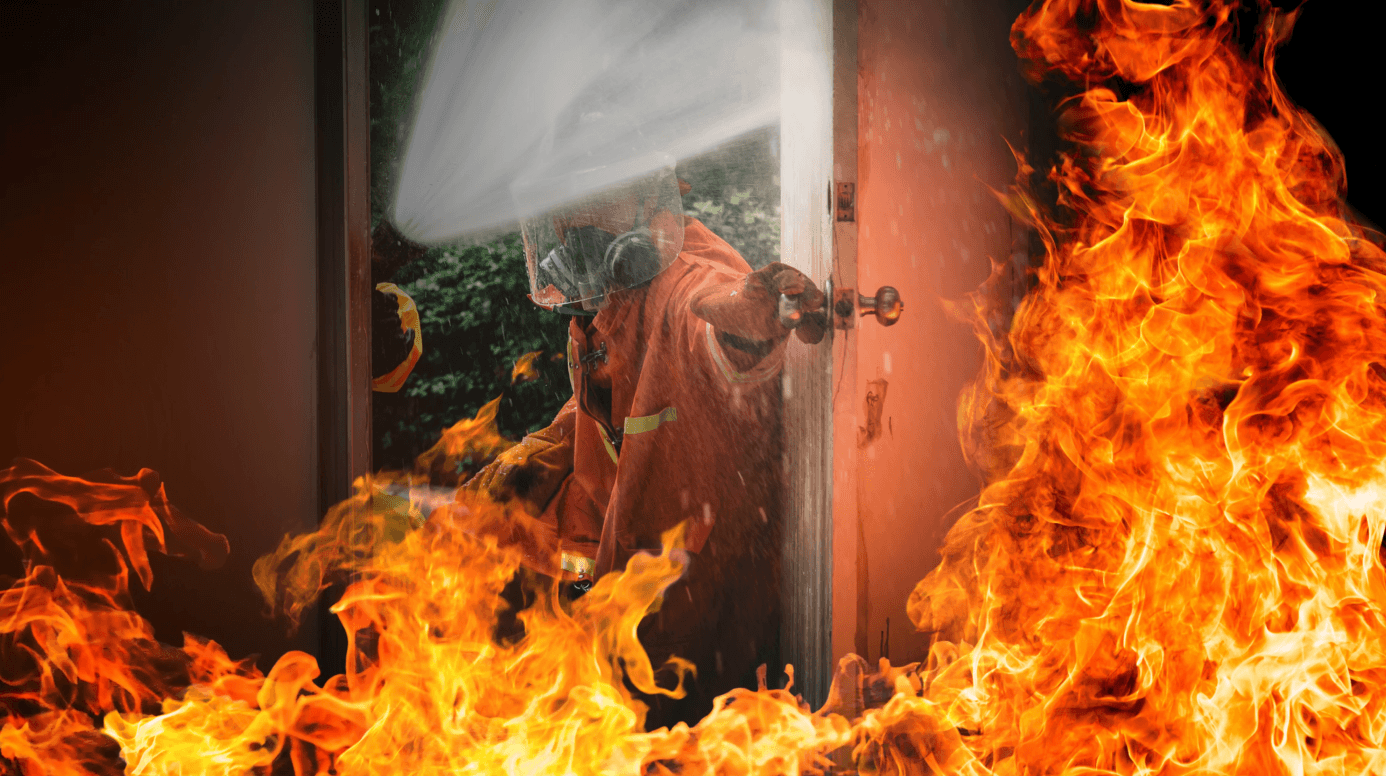
Protect lives by slowing the spread of fire and smoke
Reduce property damage by containing fire within compartments
Ensure legal compliance with NSW fire and building regulations
Reduce insurance risk and potential claim disputes
Provide peace of mind for residents, tenants, and owners
Support emergency services by buying valuable response time
In real-world incidents, compliant fire-rated walls and doors have repeatedly prevented fires from spreading between floors and tenancies — allowing safe evacuation and limiting costly damage.
Fire-Rated Repairs & Maintenance with Elysium Collective
Our team specialise in commercial and strata maintenance, including:
Fire-rated plasterboard and wall repairs
Rectification of damaged or non-compliant fire-rated systems
Water damage repairs affecting fire-rated elements
Coordination with certified fire safety professionals where required
We understand how easily fire ratings can be compromised — and how important it is to restore them correctly, not just cosmetically.
Need Fire-Rated Repairs or Compliance Support in Sydney?
If you manage or own a commercial or strata property in Sydney and need expert advice or repairs to fire-rated systems, Elysium Collective is here to help. Contact our team today to discuss compliant, professional fire-rated maintenance you can trust.